
Rewilding business, education and the next generation
From the climate and biodiversity crises to screen addiction, declining mental health and geo-political instability - the challenges facing schools and young people are coming thick and fast. If you are worrying about the state of our planet and the future, you can be sure your colleagues, students, parents and the wider school community are worrying about them too.
But what role do schools and teachers have in tackling these crises? How can we best prepare young people to be confident, resilient and able to thrive in such a rapidly changing world?
Perhaps controversially, I believe the answer doesn’t lie in a classroom.
Out there in the ‘real’ world, geography is intimately connected to politics. Social cohesion is reliant on economics and the environment. Business is dependent on ecosystems, farming and geo-political relations.
To put it simply, everything is interconnected. So why isn’t education?
We have an education system which teaches history separately from maths, geography separate from economics. And parallel to all this is outdoor learning; often regarded as something completely unrelated to what we teach in a classroom, but which has been proven time and again to increase academic attainment and improve mental health, communication skills and positive aspiration.
And then there are school trips - long seen as the bridge between the classroom and that ‘real’, messy, interconnected world. Yet for all the benefits of school trips and residentials, they haven't evolved in decades. In that time the world has changed dramatically, though, and in the face of the climate and biodiversity crises, the humble school trip is no longer fit for purpose.
So in the midst of the pandemic, with my school expedition company fighting for survival, I started pondering a question, “What would it look like if we took all the benefits of an overseas school expedition, and delivered it here in the UK, to be low-cost and low-carbon?
That question has taken me on a journey to something far bigger and more exciting than I first envisaged. It’s moved from a utopian concept to a real physical place you can visit.
It’s called The Bioasis.
Drawing on nearly 20 years of experience in ethical travel, I wanted to create a business that was truly regenerative. I believe for-profit business has to be a major driver in making the world a better place and tackling the planetary crises. We can’t rely on government and not-for-profits to clean up behind the private sector.
The Bioasis is in many ways a form of tourism. We create experiences and provide adventures. But it’s also so much more. We are contributing to the rural economy, encouraging landowners to give up intensive farming for wildflower meadows and improved biodiversity. We combine cross-curricular education and planet-positive behavioural change so young people and adults alike have the skill set to thrive in an uncertain future.
It’s not just win-win. It’s win-win-win-win.
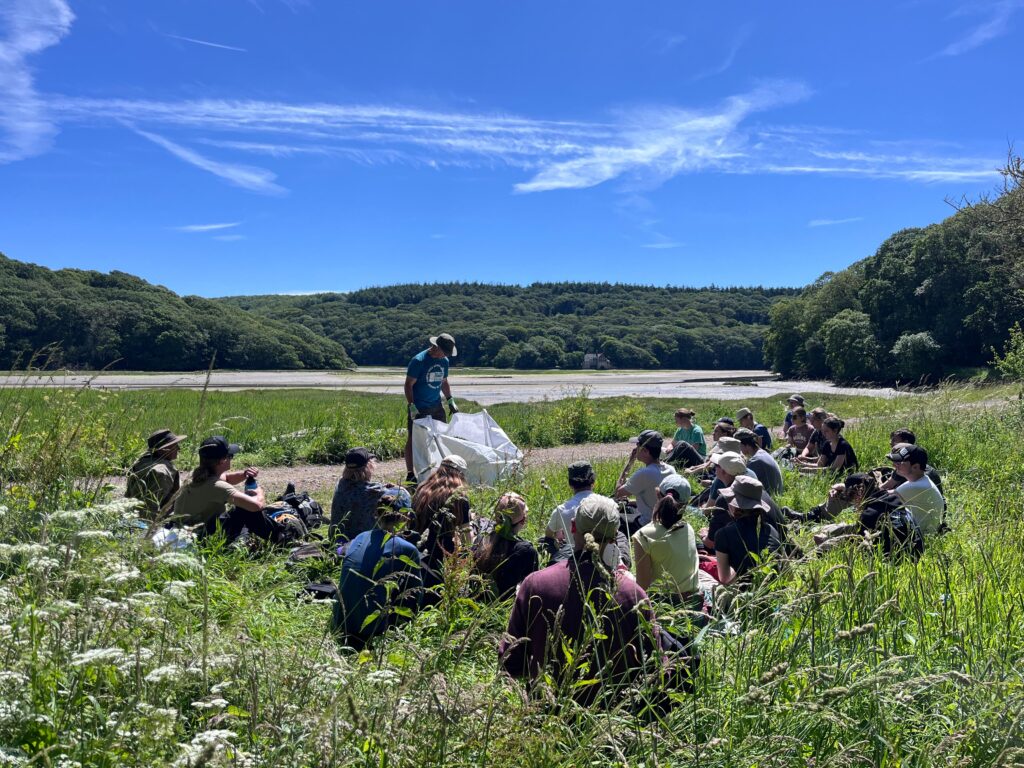
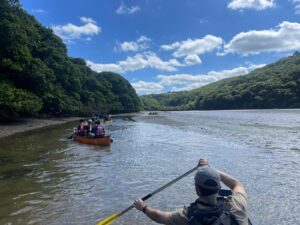
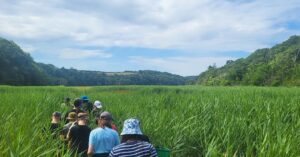
Our multi-day residential ‘missions’ take young people out of the classroom, out of their comfort zones and into 1,200 acres of wildflower meadows, salt marshes, ancient woodland and sparkling rivers.
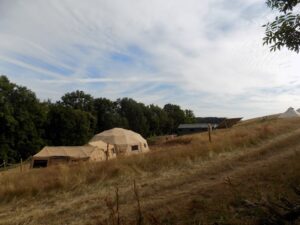
Off-grid, away from mobiles and mirrors, surrounded by biodiversity, sunsets and stars, our solar-powered basecamps provide a low carbon base from which to tackle screen addiction, climate anxiety and the mental health crisis.
We join dots and encourage curiosity. Connecting cross-curricular learning with resilience building adventures; hands-on conservation work with active hope and personal development; all while improving understanding, contributing to a better environment and providing a pathway to a visibly better future.
But at its heart, The Bioasis is a space, both physical and metaphorical, in which to think differently. For young minds to be nourished. For change to take root.
You can find out more at www.thebioasis.com
All images courtesy of thebioasis
About the author:
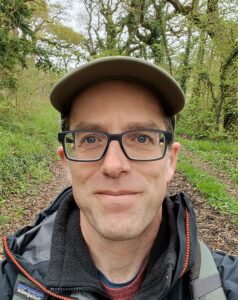 Adrian Ferraro is founder/director at The Bioasis and previously founder/director at STC Expeditions. He has travelled to more than 60 countries worldwide, including more than 20 countries in Africa. He regularly lectures in Ethical Tourism for The Royal College of Physicians and Surgeons Glasgow for their International Diplomas in Expedition Medicine and Travel Medicine and has also lectured for the Royal Geographical Society on Zaire: Expeditions and Ebola. Based in Exeter, in his spare time he surfs, plays squash and sings in a gospel/soul choir.
Past guest blogs:
Past guest blogs from previous months can be found under "News: categories - past guest blogs", or by following this link https://www.geographysouthwest.co.uk/category/past-guest-blogs/