
What Makes a Happy Place? What Geography Can Learn from Nordic Third Places
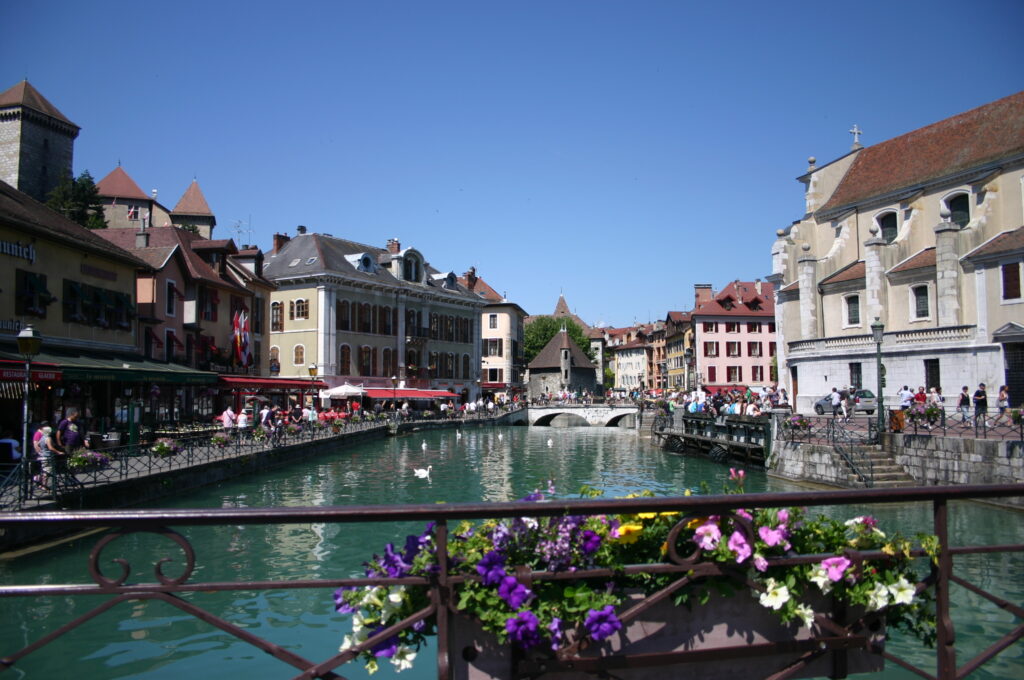
What makes a place happy?
Could the spaces where people belong be as important to human development as income, education and health?
Iceland, Denmark, Sweden, and Finland consistently rank among the world's happiest nations, score exceptionally highly on the Human Development Index, and lead global measures of equality and social progress. But why?
Over recent years I have spent time in the Nordic countries and become fascinated by their social culture and lifestyle. While the relationship between place, wellbeing and human development is complex, I wondered whether everyday spaces might answer the question.
The starting point for my own geographical enquiry.
In October 2024, I questioned 172 Icelandic locals in Reykjavik.
This was not intended as formal academic research, but as geographical observation into lived experience, place attachment, and how people interact with their everyday environments. I asked each person two questions: Have you heard of the phrase a third place? And do you have a third place?
87% of people interviewed had a third place- somewhere people regularly spend time that isn’t their work or home.
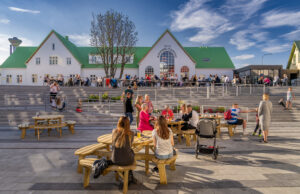
Cafe and outdoor third place, Selfoss, Iceland. Discover the World Education
The term “third place” originates from a 1989 book, The Great Good Place, by sociologist Ray Oldenburg. He characterised third places as locations that facilitate social interaction outside of the people you live or work with and encourage “public relaxation.” Third Places are where you encounter “regulars” and form potential new connections. These spaces tend to foster light, pleasant conversation and are free from expectations of productivity.
So, could Third Place Theory help geographers understand why some places build stronger communities, greater wellbeing and higher levels of human development than others?
Third Place Theory
In The Great Good Place, Oldenburg demonstrates how and why third places are essential to community and public life, arguing that bars, coffee shops, general stores, and other "third places" are central to local democracy and community vitality. Oldenburg’s findings are at the heart of my research as I began asking: do the Nordics even realise why their “third place” is a fundamental reason for their happiness, and is this something that other countries are losing?
The Happy Nordics
After asking Nordic people where their third place was, the overwhelming responses were local cafés, parks and public hot tubs.
I spent time in Denmark and noticed the importance of independently owned cafes and bakeries. The cafes are designed to encourage lingering conversation and social interaction (and were always busy!)
One coffee shop owner said that watching her customers enjoying coffee, talking, and laughing was her dream when she set up her coffee house (and to serve the best pastries in town!)

Photo by Nicolas J Leclercq on Unsplash
The Swedish phrase Fika means “making time for friends and colleagues to share a hot drink and something to eat.”
Sweden also has the most coffee shops per capita in Europe. Could this everyday ritual of slowing down and being present contribute to Sweden's consistently high levels of well-being?
In Finnish culture, saunas are a place to rest and cleanse mind and body. They have more saunas per person than anywhere else in the world!
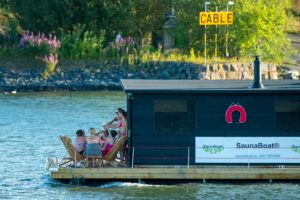
People relaxing on a sauna boat in Finland. Photo by Margo Evardson on Unsplash
The Finnish sauna perfectly illustrates the idea of a third place—a public space designed around relaxation and well-being, not productivity.
Can a Third Place be Designed?
Karen Christensen builds on Oldenburg's research, showing that recognising the value of third places can bring major social and economic benefits to a country's development.
Starbucks ex CEO Howard Schultz also adopted the phrase third place to describe the coffee shop chain.
He wanted Starbucks to be the ultimate third place, saying, “At home, you’re part of a family. At work you’re part of a company. And somewhere in between there’s a place where you can sit back and be yourself. That’s what a Starbucks store is to many of its customers, a kind of ‘third place’ where they can escape, reflect, read, chat or listen. Providing the world with a warm and welcoming third place may be our most important role and responsibility.”
However, in recent years, Starbucks’ popularity has declined, many don’t have chairs, reflecting societal demand for a quick turnaround and subsequently 400 stores worldwide have closed.
True believers of the value of the third place will have reservations about Starbucks being a third place asking, “Can a third place be designed, or does it have to emerge naturally from the community that uses it?”

Books and cafe-Finland. Photo by Mika Ruusunen on Unsplash
To conclude…
Perhaps one of the most important geographical questions is not whether Nordic countries have more coffee shops or more saunas, but whether they have deliberately created cultures and places that encourage people to spend time together.
As geographers we teach students about GDP, Human Development Index scores and quality of life indicators. Third Place Theory reminds us that human development is also shaped by the everyday spaces that strengthen communities.
When we ask why some places flourish, we should spend just as much time studying cafés, libraries, parks and public baths as we do statistics.
Third Place Theory can explain why Nordic countries are so happy while offering geographers a powerful lens to investigate their own communities.
Download your Free classroom poster on Third place here and award-winning happy Nordics classroom resource including poster here.
Sources:
https://www.thepourover.coffee/starbucks-and-the-myth-of-the-third-place/
https://www.pps.org/article/roldenburg
https://www.thegoodtrade.com/features/third-place-community-spaces/
https://ww3.rics.org/uk/en/modus/built-environment/homes-and-communities/third-places.html
https://www.today.com/life/inspiration/third-place-meaning-rcna94279
https://theweek.com/culture-life/third-places-disappearing
https://saunafromfinland.com/news/finnish-saunas-as-social-hubs/
https://karenchristensen.substack.com/
About the author: Karen Corfield is an Education Development Consultant at Discover the World Education, an experienced geography educator, and a CPD provider. With more than 25 years’ experience across teaching, pastoral leadership and educational travel, she is passionate about exploring how geography can help us understand the relationship between people, places and wellbeing. A former Head of Geography and pastoral deputy, Karen now delivers geography CPD nationally and internationally, develops contemporary case studies and resources, and works closely with the Geographical Association. Karen's interests include human development, wellbeing, sustainability, place and experiential learning, alongside her passion for Iceland and overseas education.