
Meet the Fieldwork Tutor: Q&A

In the April 2025 guest blog, Daisy Scanes, Lead Fieldwork Tutor at Skern Lodge, Devon looked at the important role of the field work tutor and provides advice on planning field trips and NEA support.
How did you get involved with tutoring Geography fieldwork?
I am the Lead Fieldwork Tutor at Skern Lodge and have been delivering geography and environmental courses here in North Devon since 2018, along with a variety of outdoor adventurous activities. I studied Human Geography at university, focusing on inequalities in the urban environment, the impact of economic and social change, and themes like placemaking, rebranding and regeneration. I wasn’t entirely sure where my degree would take me, but I knew I had a passion for geography, teaching, and outdoor pursuits. Fortunately, at Skern Lodge, I’ve been able to combine all three, creating the role I’m in now!
What does your job entail?
My main job is to organise, lead and evaluate our geography fieldwork trips. I plan and guide students through a variety of field studies, from physical geography on the coast or in the river, to human geography in our urban towns and villages.
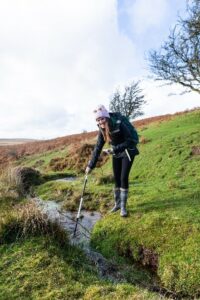
In addition to leading fieldwork, I also instruct many of our outdoor adventure activities, such as climbing, archery and tunnels. I am qualified to teach surfing and kayaking, giving students the opportunity to connect with the natural environment in an active, engaging way.
What do you most enjoy about your role?
I love the variety and diversity of my role – from planning fieldwork programmes to getting students out on location and actively learning through hands-on experience. There’s something incredibly rewarding about seeing students grasp geographical concepts and apply them in the field. It’s equally fulfilling to introduce children to new outdoor activities, where they can build confidence and teamwork skills while exploring the landscapes of North Devon. Whether it’s teaching surfing on the beach or guiding them through fieldwork techniques, my role gives me the chance to inspire students in both academic and practical ways, all while sharing my passion for geography and outdoor adventure.
What do you think are the key skills you need to be a fieldwork tutor?
Being a fieldwork tutor requires a blend of practical, interpersonal, and academic skills. A strong understanding of geography and fieldwork methodologies is essential, enabling you to guide students effectively and ensure their investigations are both valid and meaningful. Communication skills are vital, being able to explain complex concepts clearly and engage students in the field is vital. You also need to be enthusiastic and to keep students motivated, especially in challenging weather conditions. Finally, strong organisational skills help in planning, coordinating logistics, and managing safety, all while creating a positive and productive learning environment.
What is your favourite fieldwork location to visit?
Although I specialise in human geography, my favourite fieldwork location in North Devon is the coast. Westward Ho! beach is an incredible place for exploring a wide range of geographical concepts such as coastal processes and landforms, coastal management, sea level change, land use and the impact of tourism. The Pebble Ridge is a brilliant example of a depositional landform with a significant historical and environmental importance at Westward Ho! It is a clear demonstration of the way erosion, deposition and wave action interact to shape the landscape and for students to see how theory comes to life in front of them.
Plus, there’s something extra special about learning firsthand about coastal processes while surfing the waves and experiencing the environment up close. The beach provides such a dynamic setting for fieldwork, where students can combine academic knowledge with real-world application, making it a truly memorable experience.
How does fieldwork help different age groups?
I teach students ranging from Primary School age all the way through to GCSE and A Level. With younger students, such as those in Key Stage 1 and 2, I focus on making geography engaging and hands-on. This often involves activities that help them explore basic concepts like human and physical geography through fun, interactive fieldwork. As students’ progress to Key Stage 3, I introduce more complex ideas and encourage critical thinking, helping them make connections between the world they experience and the broader geographical themes they’re studying. For GCSE and A Level students, the fieldwork becomes more advanced, with a focus on research, data collection, and analysis. I guide students through enquiry-based investigations, helping them build the skills necessary to complete their Non-Examined Assessments (NEA) and succeed in exams.
How do you support students with their A Level NEA?
I find the NEA (Non-Exam Assessment) to be an incredibly rewarding part of the geography course. It’s fantastic to see students take ownership of their projects, develop their own research questions, and apply the skills they’ve learned throughout their studies. It’s a real highlight for me as a tutor to support them through their Independent Investigations and help them to succeed. My advice to them is to get organised and start early! The NEA requires careful planning, from selecting a clear research question to collecting and analysing data. Give yourself plenty of time to review your work and make any necessary adjustments. Also, be open to adapting your approach if things don’t go exactly as planned. Flexibility is key, and remember, the more you invest in the planning and data collection stages, the easier the analysis and writing will be later.
I have seen a great variety of NEA titles. One student focused on the benches and their placement within Westward Ho! They explored how the positioning of benches influenced social interactions, accessibility, and the overall use of public spaces. It was a unique and thoughtful approach, linking human geography with the physical environment, and it was fascinating to see how small details like this could reveal broader insights into community dynamics.
What advice can you give to schools when designing a programme with a Fieldwork Tutor?
My advice would be to ensure clear communication between the school and the fieldwork tutor from the very start. It’s important to discuss the learning objectives, tailor the programme to the specific needs of the students and align the fieldwork activities with your curriculum. Flexibility is also key here; fieldwork can be unpredictable, so being prepared to adapt plans based on weather, location, or student engagement will make the experience more rewarding.
And finally, what everyone really wants to know. How do you manage fieldwork when it’s raining?
Carry on as normal! Ideal fieldwork conditions might be dry, sunny, and wind-free, but living in England, we all know that’s not usually the case. While we can’t guarantee sunshine on every geography fieldwork day, we wrap up warm, layer on waterproofs and get out there, rain or shine. Some of the most memorable field trips are the ones where we’re braving pouring rain, trying to hold up a ranging pole, measure a pebble, or write on a soggy worksheet. After an experience like that, I’m sure students will never forget it and hopefully, they’ll take some of the theory and fieldwork experience with them too! We can also adapt by using laminated worksheets and permanent pens and sometimes collecting data on phones.
About the author:
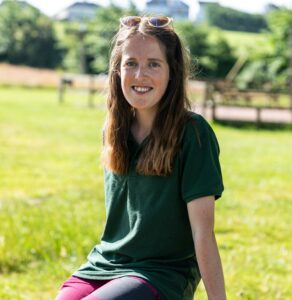 Daisy is the Lead Fieldwork Tutor at Skern Lodge. She has been delivering geography and environmental courses here in North Devon since 2018, along with a variety of outdoor adventurous activities. Before joining Skern Lodge, she worked as an Environmental Education Ranger, organising and leading outdoor environmental activities such as bushcraft and forest school. When Daisy’s not working, she can be found in, on or near the ocean swimming, paddle-boarding, and walking the coast path.
Daisy can be contacted at Daisy.Scanes@skernlodge.co.uk
Further details of fieldwork activities at Skern Lodge can be found on their website. https://www.skernlodge.com/field-studies
Past guest blogs:
Past guest blogs from previous months can be found under "News: categories - past guest blogs", or by following this link https://www.geographysouthwest.co.uk/category/past-guest-blogs/