
Nature writing: can it move beyond dystopia to a brighter vision of the future?
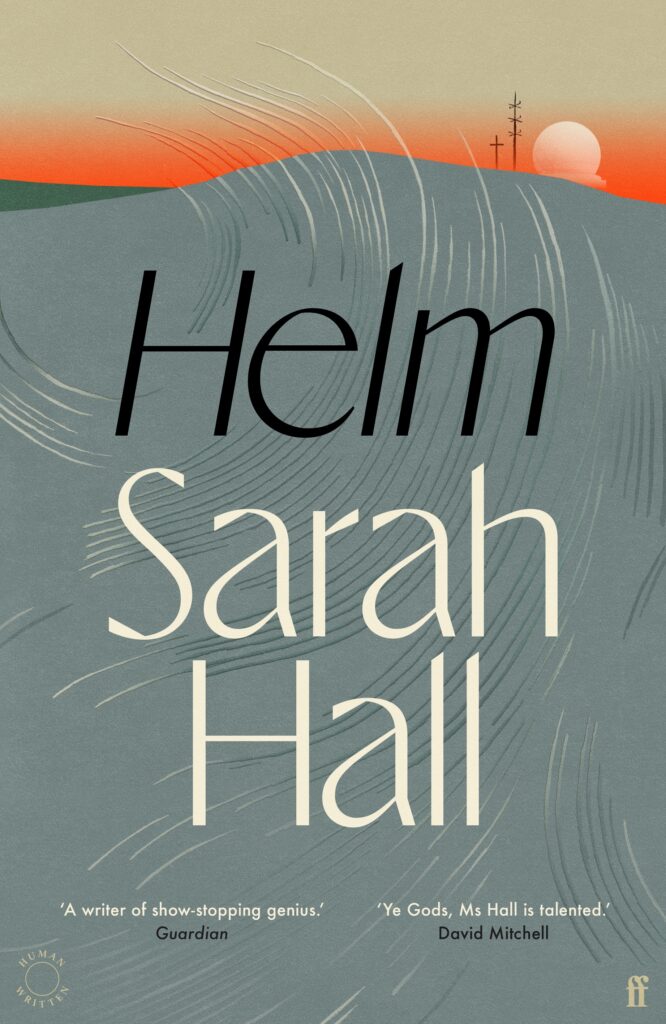
Nature writing: can it move beyond dystopia to a brighter vision of the future?
Nearly a quarter of a century ago when I published my first novel, Haweswater, about the impact of dam-building in north-west England, nature writing felt quite different, at least for me. Several landmark novels about climate apocalypse and survivalism had been published, including Z for Zachariah by Robert C O’Brien and The Death of Grass by John Christopher. These stories involved anomalistic catastrophes – a mutated virus, nuclear war – and they were very bleak.
In the 2000s, a whole spate of alarming non-fiction books arrived, forecasting the devastating effect of global temperature rises, mass extinctions, and the chaotic world that would occur if our trajectory of fossil fuel consumption, industrial farming, deforestation and the like wasn’t altered. Books like Six Degrees (Mark Lynas), A World Without Bees (Alison Benjamin and Brian McCallum), and Half Gone (Jeremy Leggett) sounded the doom gong, loudly.
As a news-hungry novelist, I responded, wringing jeopardy from these predictions to create a dire, possible future. I wrote The Carhullan Army, which imagines female paramilitary resistance in a Britain destabilised by flooding and politically fascistic, where rationing and population control are the new norms. Looking back, I can see this story arrived out of pure, exhilarated fear about impending ecological disaster, the repressive systems which could arise out of it and their effect, especially, on women.
Cli-fi is now its own genre, and booming, its themes curated on bookshops tables. But is pessimism still the prevailing mood? Utopia, it’s said, is difficult to write and perhaps less interesting to read. “Whoever tries to imagine perfection simply reveals his own emptiness,” George Orwell asserted. Darkness is attractive in so far as it’s inherently dramatic to depict, provocative and recognisable. Perhaps dystopia serves a purpose, as a repellent. It’s difficult to know whether it acts as a cautionary tale, deterring people from its pathways, or whether it simply provides disturbing entertainment while endorsing the worst-case scenario.
But is Orwell’s philosophy correct? Or might the premise be learned incapacity, a defeatist ideology that commits us to mess and devilry, rather than nurturing anything better? Might it hinder solution stories and contribute to a negative cultural paralysis?
So, what is the fiction that needs to be written now? This is the question I grappled with over the decades of writing my novel Helm. Is it about signposting progress when it comes to environmental adaptation and damage limitation? Should writers try to offer a restorative or rousing spirit for the times we live in, an opposition to eschatology? Can literature actually be a tool to encourage something better – creating eco-topia on the page, so it might be imagined off it? Midway through the writing of the book, I took part in a British Council Nature Writing panel in Germany and this last question was asked by the audience. Robert Macfarlane, the chair, barely paused before saying: yes. I remained silent.
Helm is a book about a unique aerial phenomenon, Britain’s only named wind, far older than humans and perhaps imperilled because of us. After more than a decade of stalls, rewrites and re-examinations of the topic, I had begun wondering if I should imagine ways up and out of doom scenarios instead of just describing the conflict within them. The answer was yes.
The Helm’s-eye overview gives a whimsical perspective of human endeavour, our significant anthropogenic moment on the planet, our solipsism and minimalism in the scheme of things, and a sense of: what next? This allowed for a fundamental shift in spirit towards buoyancy and a rescaling. In the end, it felt as meaningful and right to try to imagine positive countervailing ideas around our ecological impact as the dystopias had previously felt.
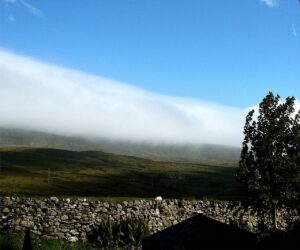
Helm Bar-Attribution OldFaw at English Wikipedia
Helm is far from eco-topia. But I hope the book is a constructive offering for our current moment. I’ve always believed fiction can be vital in allowing readers to apprehend and experience other versions of the world. I’m starting to believe it can play a part in encouraging healthier visions of the environment, by depicting our benign proclivities, and imagining that marvellous natural phenomena like the Helm wind can be saved.
Helm by Sarah Hall (Author) (Faber & Faber, £20)
A BBC interview with Sarah Hall can be found here: https://www.bbc.co.uk/programmes/p0lzhq2p
[This guest blog is an excerpt from an article previously published in The Guardian 16 August 2025] - https://www.theguardian.com/books/2025/aug/16/blue-sky-thinking-why-we-need-positive-climate-novels
About the author:
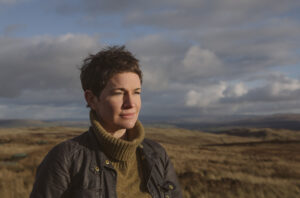
Portrait of Author Sarah Hall in Lake District, by Kat Green. 2024.
Sarah Hall is a highly regarded English novelist and short story writer, celebrated for her richly detailed prose and her deep exploration of the human condition alongside environmental themes. Born in Cumbria, she studied English and Art History at Aberystwyth University before completing an MLitt in Creative Writing at St Andrews University. Over her career, Hall has published seven novels and several short stories, earning recognition through several literary prize shortlists, including the prestigious Man Booker Prize. Her debut novel, Haweswater, published in 2002, won the Commonwealth Writers’ Prize for Best First Novel. The book tells the poignant story of a Cumbrian hill-farming community facing ruin due to the construction of the Haweswater reservoir. Sarah Hall is currently Professor of Creative Writing at the University of Manchester.
Past guest blogs:
Past guest blogs from previous months can be found under "News: categories - past guest blogs", or by following this link https://www.geographysouthwest.co.uk/category/past-guest-blogs/